Why Independence Alone Is No Longer Enough
For generations, independence has been celebrated as one of the great aspirations of human development. We teach children to become independent, nations fight for independence, professionals seek financial independence, and organisations pursue operational independence. Individuals are encouraged to think for themselves, stand on their own feet and avoid becoming unnecessarily dependent on others. There is considerable wisdom in this.
Dependence can become unhealthy when a person, organisation or nation is unable to function without constantly drawing upon another. Independence therefore represents maturity, responsibility, capability and the ability to contribute rather than merely consume. Yet there is another side to the story: independence, when taken to its extreme, can become isolation. The ability to stand alone is valuable; the belief that we are sufficient alone is something entirely different.
A Tree Does Not Make a Forest
Human beings are inherently relational. We are born into relationships, learn through relationships, work through relationships and build our lives through networks of people, institutions and systems. Businesses survive through relationships, families are sustained through relationships, and communities develop because people are willing to connect, contribute and cooperate.
Even the most accomplished individual depends upon networks that are often invisible. The food on our tables involves farmers, processors, transporters, traders and retailers. The technology in our hands depends upon researchers, engineers, manufacturers, logistics companies and communication infrastructure spanning continents. No individual created all these things independently. Human progress has always involved cooperation.
The question, therefore, is not whether independence is valuable. It is. The deeper question is: what should come after independence? My answer is interdependence.
Dependence, Independence and Interdependence
These concepts are related, but they are not the same. Dependence says, “I cannot function without you.” Independence says, “I can function without you.” Interdependence says, “I am capable on my own, you are capable on your own, but together we can accomplish something neither of us could achieve as effectively alone.”
That distinction matters because interdependence is not a return to unhealthy dependency. It does not require people to surrender their identity, competence, freedom or responsibility. Healthy interdependence works best when capable people bring their individual strengths into relationship with the strengths of others. It is not weakness meeting weakness; it is strength connecting with strength.
The mature person is therefore not merely someone who can stand alone. Maturity also includes knowing when to cooperate, when to listen, when to contribute and when another person’s ability can complement our own.
The Paradox of the Connected World
We are living in perhaps the most technologically connected period in human history. Families separated by thousands of kilometres can communicate instantly. Businesses collaborate across continents. Professionals work with teams they may never meet physically. Knowledge that once required years of searching can now be accessed within seconds.
Yet, despite this unprecedented connectivity, many people feel increasingly disconnected. Families struggle with communication, organisations operate through silos, communities experience fragmentation, and professionals sometimes compete where collaboration would produce better outcomes. We have developed extraordinary tools for connection without always developing the human capacity required to relate well.
This is one of the reasons interdependence deserves renewed attention. Technology can connect devices; it cannot by itself build trust. It can transmit information; it cannot automatically create understanding. It can make individuals more capable, but capability does not remove the need for meaningful relationships.
Interdependence in Leadership
Leadership is no longer simply about authority, position or having all the answers. Modern organisations require leaders who can connect people, disciplines, perspectives and resources around a common purpose. The strongest leader in the room may not be the person who knows everything, but the person who knows how to bring the right people together.
That requires humility, listening, trust and the confidence to recognise that another person’s expertise does not diminish our own. Leadership therefore becomes less about standing above everyone and more about building bridges between people. Effective leaders create environments where capable individuals can contribute their strengths without losing sight of collective responsibility.
This is particularly important in a world becoming increasingly specialised. No chief executive, accountant, engineer, educator, physician or public leader can master every discipline required to solve complex problems. Leadership increasingly depends upon the ability to integrate knowledge and coordinate people.
Interdependence in Organisations
Organisations frequently speak about teamwork while operating through deeply independent departments. Finance protects its territory, operations protects its territory, technology protects its territory, management guards its authority, and employees protect their positions. The result can be a collection of highly competent people producing far less than their combined potential.
Interdependence changes the question. Instead of asking only, “What is my department responsible for?” we also begin asking, “What outcome are we collectively responsible for?” That apparently small shift can significantly change organisational culture. Responsibility remains clear, but collaboration becomes part of how results are achieved.
An interdependent organisation does not eliminate specialised departments or individual accountability. Rather, it ensures that expertise does not become isolation. Finance still performs the work of finance, technology still performs the work of technology, and management still carries leadership responsibility, but each recognises that organisational success depends upon how effectively these functions work together.
Interdependence in Families and Relationships
The same balance applies to families and personal relationships. Dependence without responsibility can become burdensome, while extreme independence can make intimacy difficult. Healthy relationships require both individuality and connection.
Two people do not have to become one personality in order to build one life. Each can retain identity, convictions, abilities and personal responsibility while recognising that genuine relationship requires contribution, communication, sacrifice and mutual support. The goal is neither, “I cannot live without you,” nor, “I do not need you.” A healthier position is: “I bring something valuable into this relationship, you bring something valuable, and together we can build something meaningful.”
Interdependence therefore protects both dignity and relationship. It allows people to remain capable without becoming isolated and connected without becoming consumed by unhealthy dependence.
Artificial Intelligence Makes This Conversation More Important
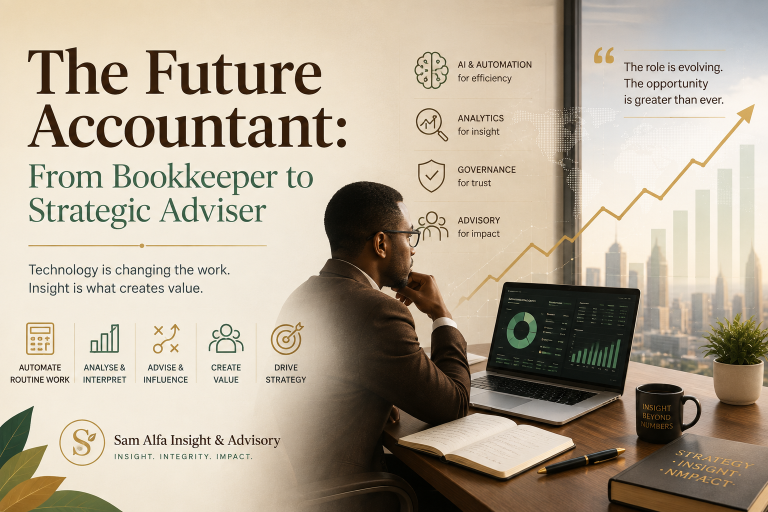
Artificial intelligence is rapidly changing how we work, learn, analyse information and make decisions. Tasks that once required hours of professional effort can increasingly be automated. Information is becoming abundant, and many forms of routine knowledge work are becoming faster and less expensive.
But as information becomes more abundant, other qualities become more valuable: judgement, trust, interpretation, wisdom, relationships and collaboration.
Technology may make an individual extraordinarily capable, but capability does not eliminate the need for other people. In many cases, it increases the importance of thoughtful interdependence. A professional may use AI to analyse data, but still require human judgement to understand context. An organisation may automate financial reporting, but still require leadership to decide what those numbers mean and what action should follow.
The future will therefore not simply belong to people who possess the most information. It will increasingly belong to those who know how to combine human insight, technology and relationships effectively.
Independence Was Important, but It Should Not Be the Final Destination
There was a time when independence represented liberation, and rightly so. Individuals and nations needed freedom from unhealthy control, domination and dependency. That achievement should never be diminished.
But maturity should not stop at the ability to stand alone. There is another level: the capacity to stand confidently and still choose connection; to possess expertise and still value the expertise of others; to lead and still listen; to achieve and still collaborate; to maintain identity without embracing isolation.
That is interdependence.
From Standing Alone to Building Together
The world does not suffer from a shortage of talented individuals. More often, it struggles with an inability to connect talent, knowledge, resources and people around common purposes. The next major advancement in many families, organisations, communities and institutions may therefore not come simply from producing more independent people, but from teaching capable people how to become productively interdependent.
This is one of the central conversations we will explore through Sam Alfa Insight & Advisory: How do we build stronger relationships without creating unhealthy dependence? How can leaders develop collaborative organisations without weakening accountability? How can technology strengthen rather than fragment human relationships? How can capable individuals retain their independence while accomplishing more together?
These questions sit at the heart of what I call practical interdependence. Independence gives us the ability to stand. Interdependence reveals what becomes possible when capable people choose to build together.
Continue the Conversation
Sam Alfa Insight & Advisory is building a community around practical interdependence, leadership, human relationships, accounting, artificial intelligence and the changing future of work.
Join the Sam Alfa Insight Community to participate in thoughtful conversations, connect with others and explore how these principles can be applied in everyday life, leadership and organisations.
You can also explore Dr. Sam Alfa’s books and resources for a deeper examination of dependence, independence, interdependence, leadership and human existence.